
The Hidden Costs of Data Warehousing (And Why DIY Isn’t Really Cheaper)
Most teams start a data warehouse project because they want control, flexibility, and the promise of long-term savings. On paper, that makes sense.
The reality? Cloud data warehousing is full of hidden fees, unpredictable usage spikes, and ongoing engineering overhead. Those costs add up fast. Below are the biggest cost traps teams run into when they try to build and maintain their own data warehouse.
1. Storage Costs
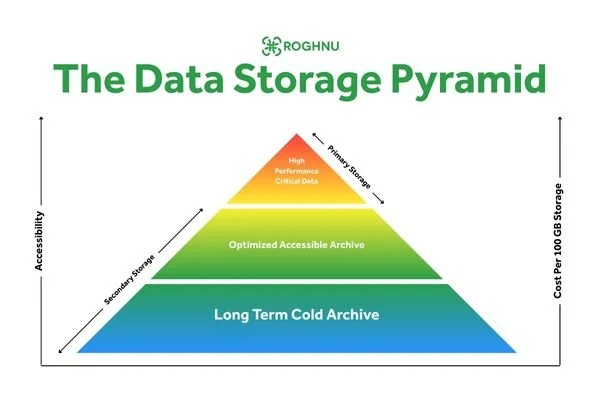
Hot vs. cold storage tiers
Fast-access (hot) storage costs significantly more than archival (cold). Many platforms automatically move data between tiers but charge extra when you read from cold storage, turning simple queries into surprise line items.
Compression differences
“Stored” data doesn’t equal “raw” data. Each vendor compresses files differently, meaning 100 GB of data can bill as 100 GB or 60 GB, depending on how your data is structured.
Replication costs
For high availability, some warehouses create multiple replicas of your data, effectively doubling or tripling storage charges behind the scenes.
2. Compute Costs
Storage is just the beginning, and all things considered, it’s pretty cheap. Compute is not.
Idle or over-provisioned clusters
Systems like SnowFlake, BigQuery, or Redshift charge for compute even when you’re not actively using them. Engineers often keep clusters running “just in case,” racking up unseen monthly spend.
Concurrency scaling
Traffic spikes? Sounds like a good thing! But when your workload spikes, extra compute resources spin up automatically — at a higher rate.
Materialized views & scheduled jobs
These look cheap but run frequently in the background, burning compute credits.
3. Data Movement & Integration Costs
You pay not just to store data, and to access data, but to move it.
ETL/ELT ingestion costs
Pulling data from your ERP, CRM, and SaaS tools often costs more than the warehouse itself, especially with cloud data transfer fees.
Egress fees
Exporting data to another system (for analytics tools or APIs) triggers network egress costs.
Streaming vs. batch
Real-time pipelines (Kafka, Kinesis, or Fivetran streaming connectors) charge per event or per record. Batch is cheaper, but often doesn’t meet business needs.
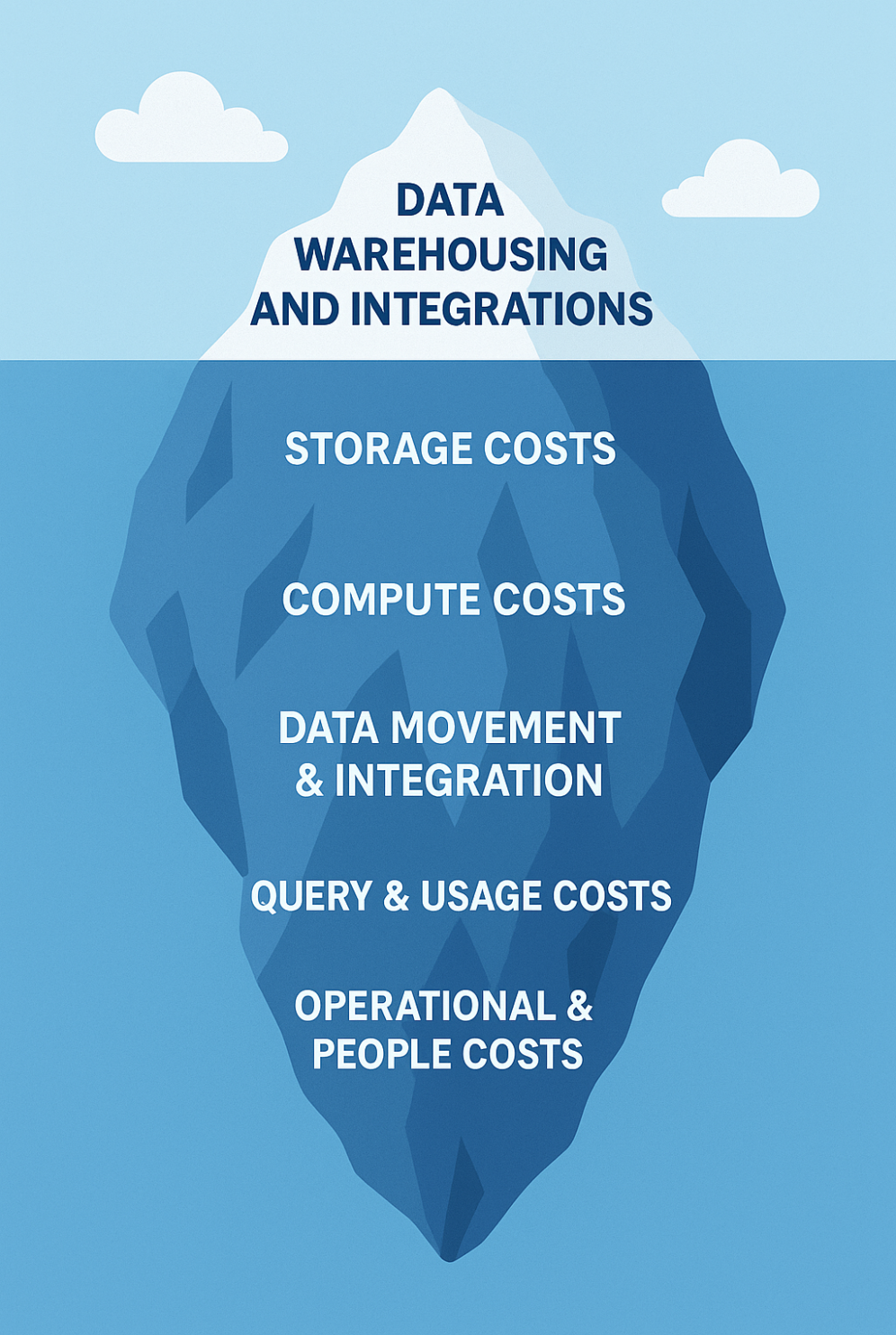
4. Query & Usage Costs
Query over-scan
In systems like BigQuery, you pay per data scanned, not returned. Poorly written queries can scan TBs unnecessarily.
Cross-region queries
Querying data stored in another region can double your query price.
Caching
Some platforms charge for cache hits or “warm” storage usage.
5. Operational & People Costs
Even if you control your warehouse data costs perfectly, people still cost money.
Ongoing optimization
Engineers spend significant time tuning queries, managing partitions, restructuring schemas, and monitoring usage just to keep costs predictable.
Governance & monitoring tools
Access control, lineage, audit trails, cost governance platforms — all require additional licenses or integrations. And someone has to maintain them.
Where Do These Costs Go With Roghnu?
Because Roghnu isn’t a raw cloud warehouse, these costs disappear. It’s a fully managed, fixed-cost platform designed specifically for ERP/financial data. In short, we handle all the complexity you’d otherwise be paying for separately (and unpredictably).
If you’re considering a DIY warehouse, let’s talk first. We’ll show you the true cost difference.